

Laser Safety Eyewear
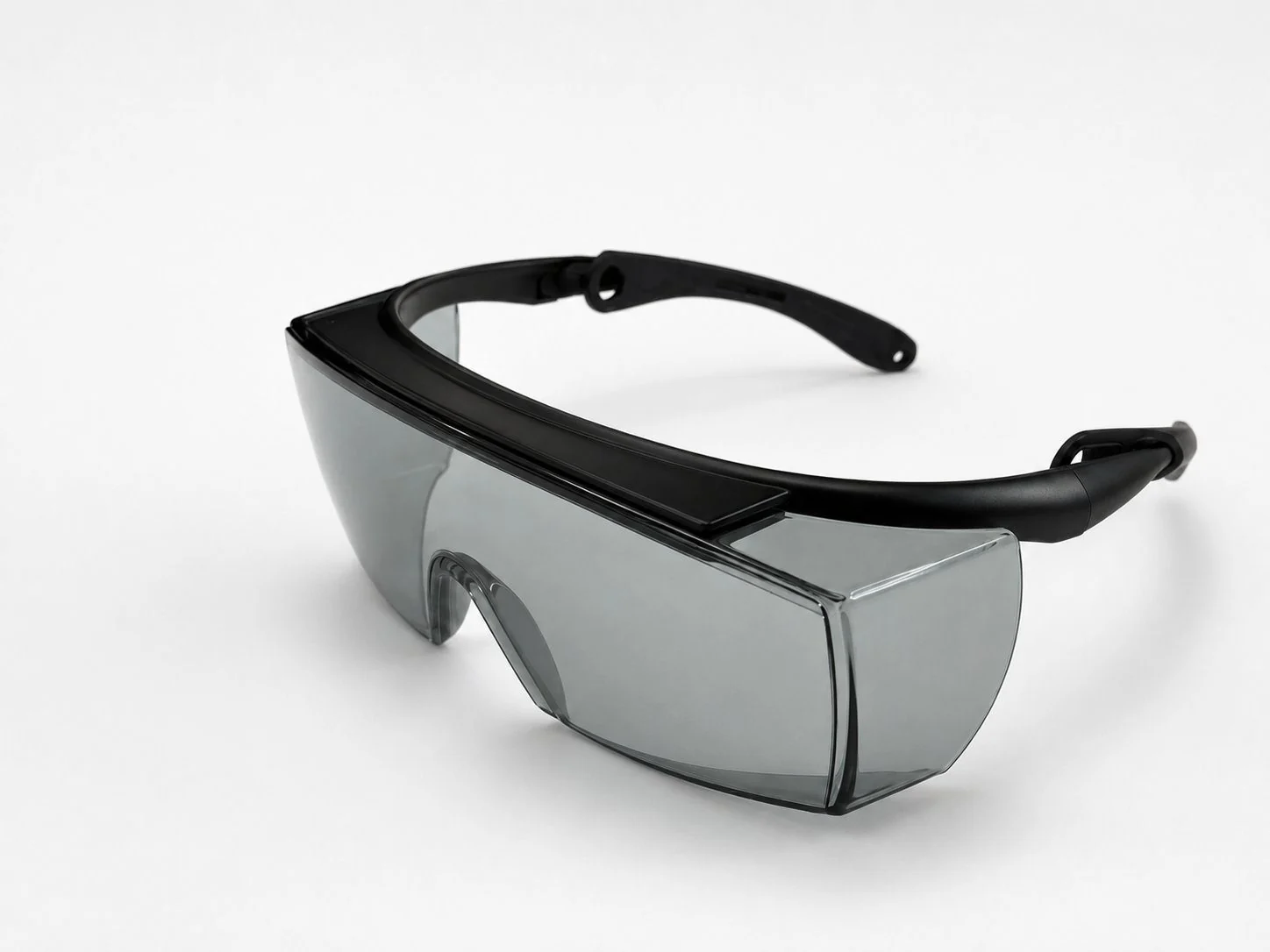
Protective eyewear for surgeons, nurses and theatre staff working with Holmium and Thulium surgical lasers. Permanently marked with its wavelength range and optical density, so it can be verified at a glance rather than assumed.
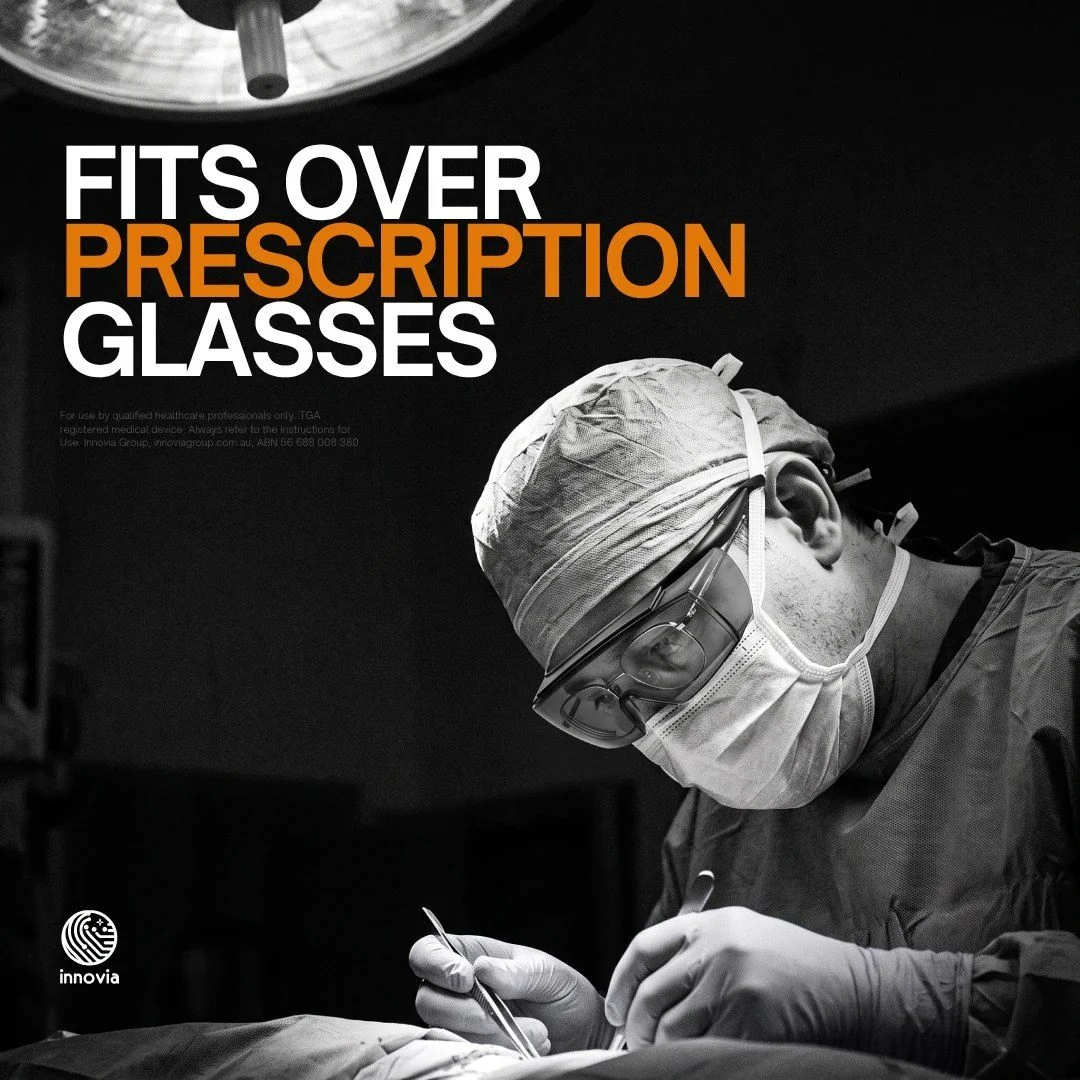
Wrap around frame with integrated side shields and adjustable arms, sized to be worn over prescription glasses. That matters in a theatre, where the alternative is staff choosing between seeing properly and being protected.
Per pair. Volume discount on 10 or more.
- Ships within 7 days
- 30 day payment terms on a PO
- Freight quoted before despatch
- 12 month warranty
One pair for both lasers
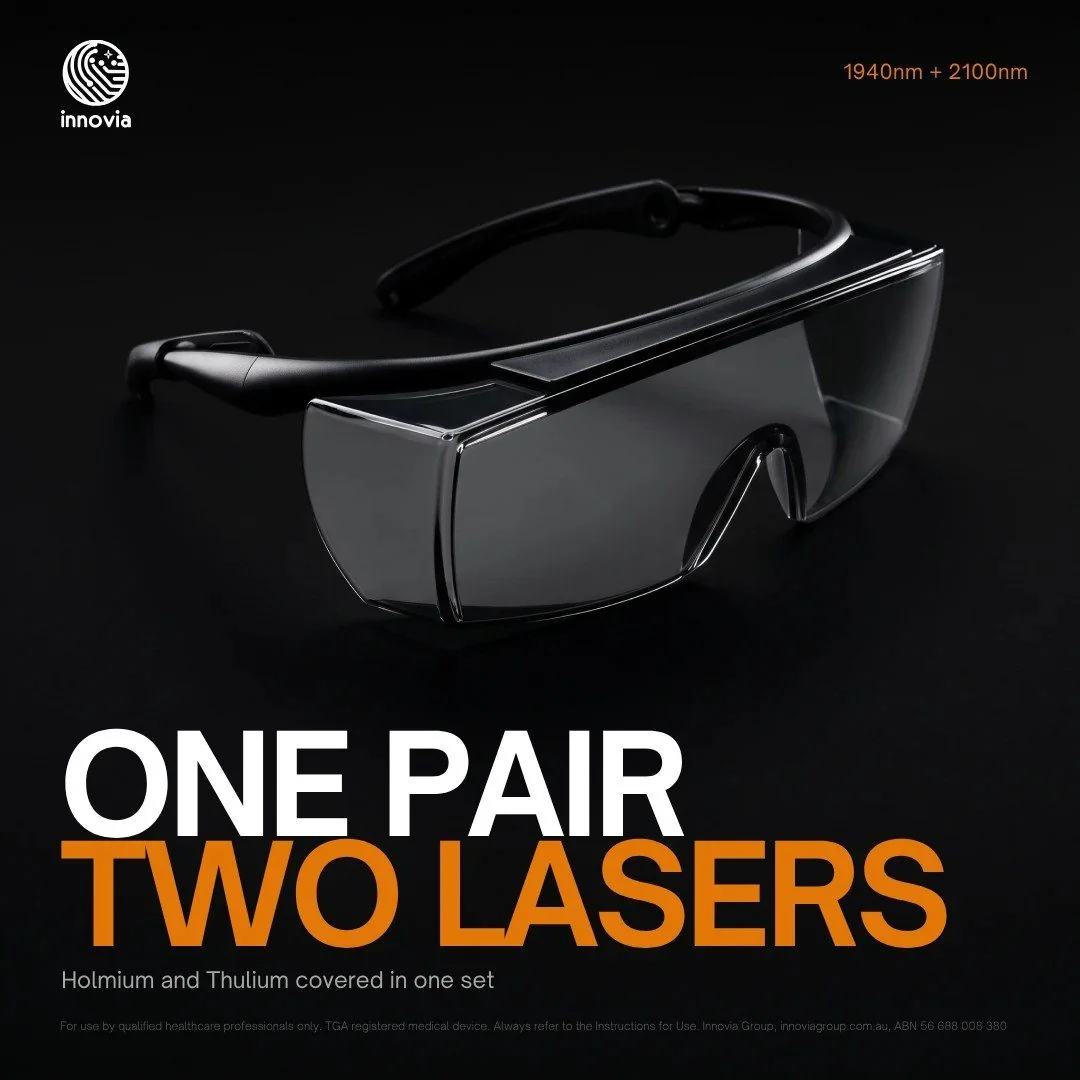
Holmium YAG runs at 2100 nm and Thulium fibre at approximately 1940 nm. Plenty of eyewear is rated for one and not the other, which is exactly where mistakes happen when both are on the same list.
This is rated 1900 to 3000 nm at OD 4+, rising to OD 5+ across 2000 to 2300 nm where Holmium sits. One pair covers both, so there is no second set to keep separate and no chance of the wrong pair being picked up mid-list.
Visible light transmission is 55%, so staff can see the field clearly while protected. Note this is a Holmium and Thulium product. It is not intended for aesthetic laser devices.
Specifications
- Model
- LP-HOL
- Protection range
- 1900 to 3000 nm
- Optical density
- OD 4+ (1900 to 3000 nm), OD 5+ (2000 to 2300 nm)
- LB rating
- 1900 to 3000 nm DI LB3 LP S CE
- Standard
- CE EN207
- Visible light transmission
- 55%
- Frame and filter
- TR90 frame, PC filter
- Design
- Wrap around with integrated side shields, adjustable arms
- Fit
- Sized to be worn over prescription glasses
- Application
- Holmium and Thulium surgical lasers
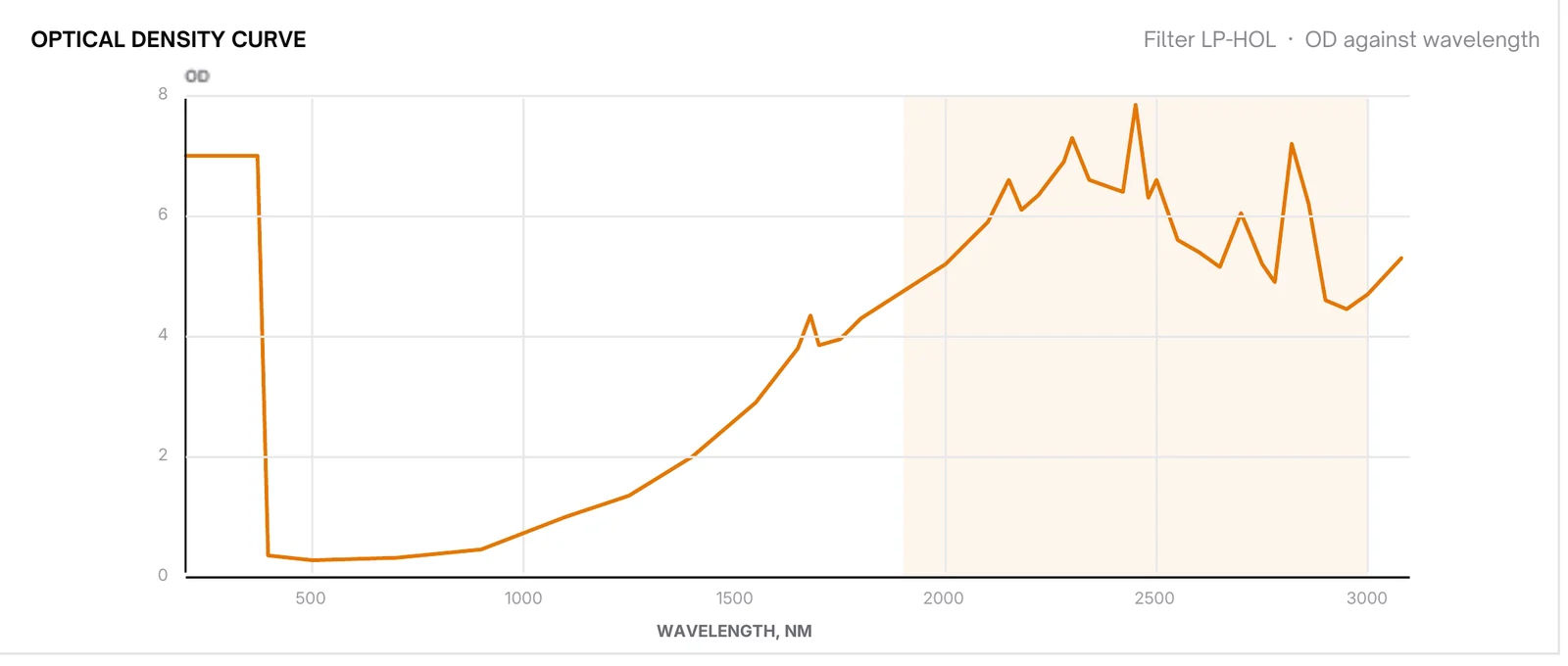
Optical density curve
Measured optical density against wavelength for the LP-HOL filter. The shaded band marks 2000 to 2300 nm, where Holmium sits and protection is highest. Thulium at approximately 1940 nm falls just inside the protected range.
Ready to protect your theatre?
We will confirm the eyewear suits your lasers before anything ships. $295 + GST per pair, volume discount on 10 or more.
What you are paying for
Verified marking
Permanent, legible wavelength and optical density marking. Eyewear that cannot be read cannot be verified, and unverifiable eyewear is a finding waiting to happen.
Documented service life
Lens coatings degrade. We supply the manufacturer's stated service life so you know what you have, rather than guessing how old a pair is.
A record of what you bought
We keep the purchase date and specification on file for every pair we supply, so you can confirm what you have and when it is due for replacement.
Laser safety eyewear questions
Does one pair cover both Holmium and Thulium lasers?
Yes. The LP-HOL is rated 1900 to 3000 nm, which covers Holmium YAG at 2100 nm and Thulium fibre at approximately 1940 nm. Optical density is OD 4+ across the range, rising to OD 5+ between 2000 and 2300 nm. One pair covers both, so there is no second set to keep separate.
Can laser safety eyewear be worn over prescription glasses?
Yes. The LP-HOL is a wrap around frame sized to fit over prescription glasses, with integrated side shields and adjustable arms. Staff do not have to choose between seeing properly and being protected.
Is this eyewear suitable for aesthetic or cosmetic lasers?
No. The LP-HOL protects from 1900 to 3000 nm, which is the Holmium and Thulium range. It does not cover the shorter wavelengths used by aesthetic laser devices, such as 532, 755 and 1064 nm. For patient protection across the full range, see our patient eyewear.
How much does laser safety eyewear cost in Australia?
The LP-HOL is $295 + GST per pair, supplied across Australia and New Zealand. Freight is quoted separately. Orders of 10 or more attract a volume discount. Payment terms are 30 days on a purchase order.
How long does delivery take?
Orders ship within 7 days. Freight is charged separately and confirmed in your quote before anything is sent.
How should laser safety eyewear be cleaned and stored?
Rinse under running water and use a cleaning fluid approved by the manufacturer. Never wipe a dry lens, because dust and grit act like sandpaper on the filter surface. To disinfect, wipe with an alcohol based disinfectant and leave no residue on the lens or frame. The LP-HOL uses a polycarbonate filter in a TR90 frame, so do not autoclave it, soak it in disinfectant solution, or put it through an ultrasonic bath. Store each pair in its own case in a cool, dark, dry place away from direct sunlight, UV lamps, chemicals and vapours, and never lens down on a bench.
How often should it be inspected?
Before every use. Confirm the 1900 to 3000 nm marking and the optical density are still legible and match the laser on the list, check the filter and frame for damage, and make sure the pair still sits securely, particularly if it is being worn over prescription glasses. Beyond that, a documented review of every pair at least once a year is good practice, recording what you hold and the date each pair entered service.
What signs of wear or damage should users look for?
Withdraw a pair if you see scratches, pitting or chips on the filter, especially in the central viewing area; cracks, crazing or bubbling; discolouration, a change in tint, or a noticeable loss of clarity; peeling or damaged coating; heat distortion or warping; a bent frame, broken arms, loose hinges, or a frame stretched enough to leave gaps at the sides; or markings that have worn to the point of being hard to read. Also withdraw any pair exposed to harsh solvents such as acetone or ammonia, and any pair known to have taken a direct laser hit beyond its rating, even if it looks perfectly fine. That last one matters because no inspection will reveal it.
What is the recommended shelf life and service life?
There is no fixed expiry date, because absorptive filters do not degrade reliably with age alone. Condition governs, not the calendar. As general industry guidance two to five years of active service is the common range, with about three years a frequent setting under regular use, and the manufacturer's stated service life is the figure that applies. ANSI Z136.1 requires regular inspection but sets no replacement cycle, and EN 207, the standard this eyewear is certified to, points to replacement when a pair shows signs of ageing or fails inspection. Record the date each pair enters service, since that is the figure most theatres cannot produce when they need it.
Protecting patients as well as staff? Our patient eyewear is rated OD 7+ across 200 to 11000 nm, so it covers surgical and aesthetic laser wavelengths alike.