

Laser Safety
Protective eyewear for surgical laser use, supplied across Australia and New Zealand. Correct for the wavelength in the room and permanently marked, so it can be verified rather than assumed.
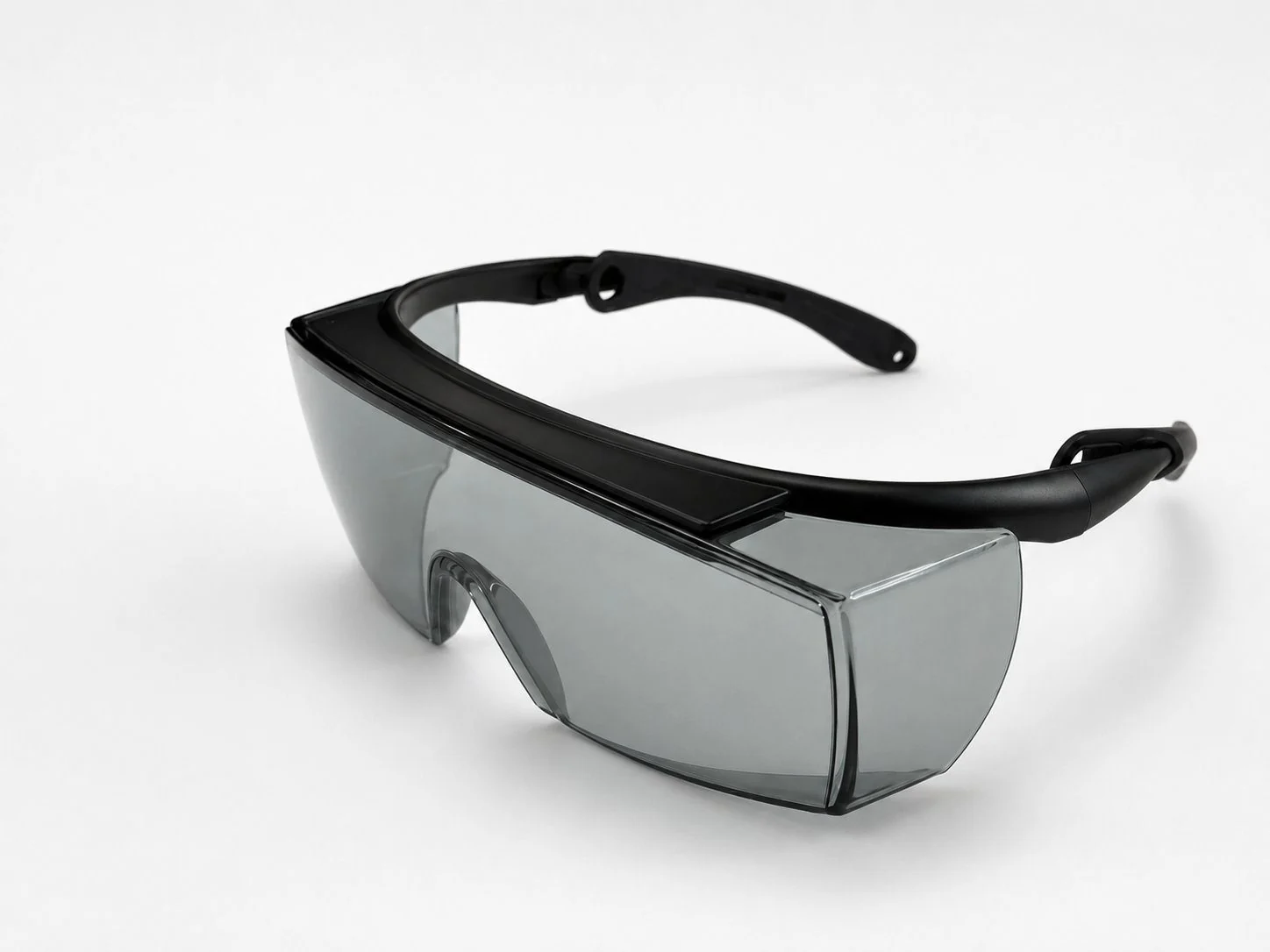
Laser Safety Eyewear
Protective eyewear for surgeons, nurses and theatre staff working with Holmium and Thulium surgical lasers. Worn over prescription glasses.
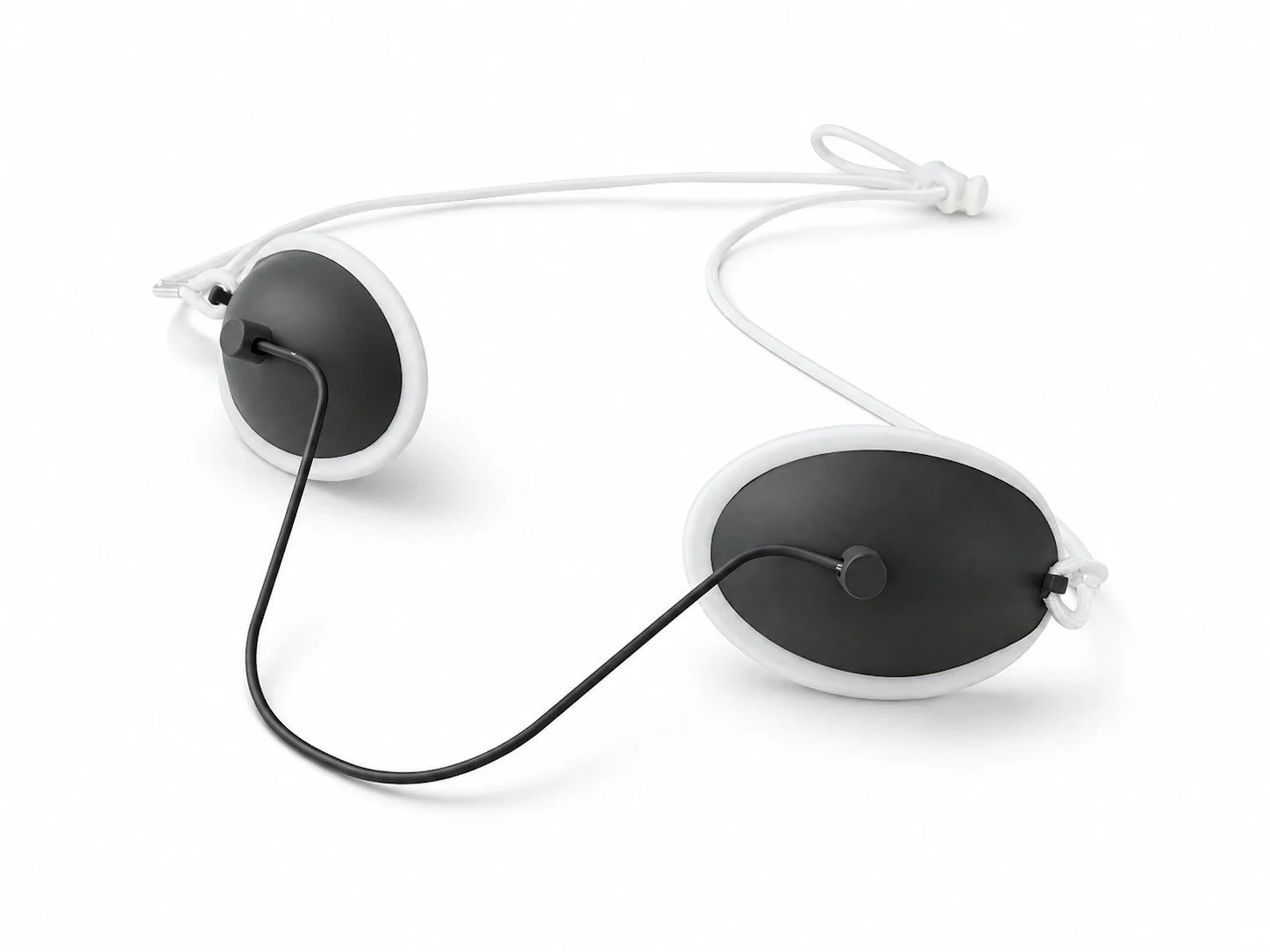
Patient Eyewear
Fully opaque patient eye shields rated OD 7+ across 200 to 11000 nm to EN207. Suited to surgical theatres, dermatology and aesthetic clinics.
Which do I need?
Laser Safety Eyewear
Worn by staff. Tinted wrap around spectacles that you can see through, so surgeons and nurses stay protected while they work.
Patient Eyewear
Worn by the patient. Fully opaque shields that you cannot see through, for someone lying still through the procedure.
Most theatres and clinics need both. Tell us what lasers you run on the order form and we will confirm suitability before anything ships.
Marked, rated and ready to verify
Laser eyewear is often the last thing checked in a theatre and the first thing to quietly fall out of date. Everything we supply carries permanent wavelength and optical density marking, so a pair can be verified at a glance rather than assumed to be the right one.
Common questions
How do I know it suits my laser?
Tell us the wavelengths you run on the order form, or say you are not sure. We confirm suitability before anything ships. If what you need is not what you have ordered, we will say so rather than send it.
How quickly will it ship?
Orders ship within 7 days.
What about freight?
Freight is charged separately and quoted with your order, so you see the cost before you commit to anything.
Can I pay by invoice or use a purchase order?
Yes. Payment terms are 30 days, and there is a purchase order field on the order form. Orders are processed by our accounts team and nothing is charged through this website.
Is there a better price for larger orders?
Yes. We offer a discount on orders of 10 or more, which is worth asking about if you are fitting out several theatres or treatment rooms. Put the quantity on the order form and we will come back with a price.
What warranty do I get?
Twelve months. Our goods also come with guarantees that cannot be excluded under the Australian Consumer Law, and nothing here limits those rights.
How should laser safety eyewear be cleaned and stored?
Rinse under running water and use a cleaning fluid approved by the manufacturer. Never wipe a dry lens, because dust and grit act like sandpaper on the filter surface. To disinfect, wipe with an alcohol based disinfectant, and if you use a spray make sure no residue is left on the lens or frame.
Do not autoclave laser eyewear, soak it in disinfectant solution or put it through an ultrasonic bath. Those methods damage the filter and shorten the life of the eyewear.
Store each pair in its own case in a cool, dark, dry place, away from direct sunlight, UV lamps, chemicals and vapours. Do not leave it on warm equipment, near heaters, or lying lens down on a bench. Most of the scratching we find is caused by storage rather than use, so individual cases extend working life more than any other single change.
How often should it be inspected?
Before every use. Confirm the wavelength and optical density marking matches the laser in the room, check the lenses and frame for damage, and make sure the pair still fits properly.
Beyond that, a documented review of every pair at least once a year is good practice, recording what you hold, which lasers each pair covers, and the date it was first put into service.
What signs of wear or damage should users look for?
Take a pair out of service if you see scratches, pitting or chips on the lens, particularly in the central viewing area; cracks, crazing or bubbling in the filter; discolouration, a change in tint, or a noticeable loss of clarity through the lens; peeling or damaged coatings; heat distortion or warping; a bent or warped frame, broken arms, loose hinges, or a frame stretched enough to leave gaps at the sides; or wavelength and optical density markings that are worn or hard to read.
Also withdraw any pair that has been cleaned with or exposed to harsh solvents such as acetone, ammonia or unapproved alcohol based cleaners, and any pair known to have taken a direct laser hit beyond its rated protection, even if it looks perfectly fine. That last one matters because it is the only failure mode where eyewear can look new and protect poorly, and no inspection will tell you otherwise.
If you are unsure, do not use it. Set it aside and have it checked.
What is the recommended shelf life and service life?
There is no fixed expiry date for laser eyewear, because absorptive filters do not degrade reliably with age alone. Condition is what governs, not the calendar.
As general industry guidance, two to five years of active service is the common range, and many safety programs settle on about three years under regular use. Treat that as a planning figure for budgets and replacement cycles rather than a rule. The figure that actually applies is the service life stated by the manufacturer of your eyewear, and we will confirm that for anything we supply.
The standards take the same position. ANSI Z136.1 requires regular inspection but specifies no replacement cycle, and EN 207 and EN 208 point to replacement when eyewear shows signs of ageing or fails inspection. We recommend recording the date each pair is first put into service, since that is the figure most theatres cannot produce when they need it.
When should laser safety glasses be replaced?
Protective laser eyewear is built to deliver dependable optical density, though like any safety gear it needs checking from time to time. Surface scratches, fractures, or damage to the coating can weaken performance, especially where filters depend on engineered surface layers.
Routine visual checks make wear easier to spot. Deep gouges across the lens, heat distortion, or frame damage affecting how the glasses sit on the face all point toward replacement. Even small blemishes near the middle of the viewing zone can affect both visibility and shielding.
How the eyewear is kept matters too. Extended time in direct sun, elevated heat, or contact with aggressive chemicals can break down some filter materials as the months pass.
Protective lenses undergo testing against set exposure thresholds, but they are not meant to serve forever without review. Keeping a basic equipment record makes it easier to monitor age and how often each pair gets used.
Swapping out damaged or well worn eyewear keeps protection reliable and supports steady laser safety habits.