

When Should Laser Safety Glasses Be Replaced?
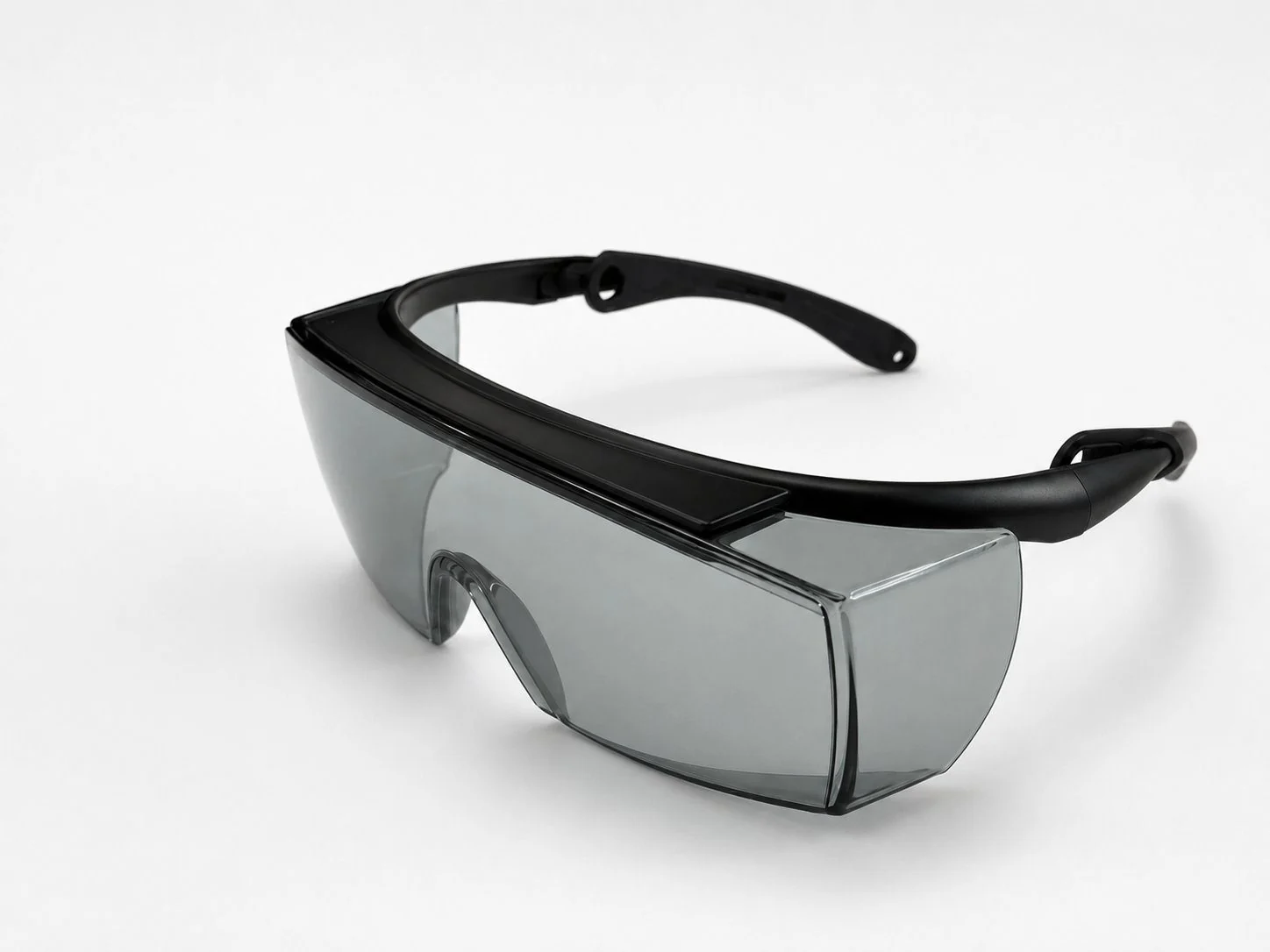
Laser safety glasses do not announce when they stop working. A pair of goggles that looks serviceable on the shelf can have a filter that no longer holds its rated optical density, and nothing about handling it will tell you. That is the awkward part of this equipment: the failure mode is invisible, and the consequence of missing it falls on the person wearing them.
There is no single expiry date that applies to all laser goggles or safety glasses. What there is, is a short list of conditions that should take a pair out of service, and a habit of checking for them.
Scratches and surface damage
This is the most common reason a pair should be withdrawn, and the most commonly ignored. A laser filter works by absorbing or reflecting specific wavelengths. A scratch through the filter layer is a path that light did not have before, and the pair no longer performs to its marked optical density at that point.
Look for scratching, pitting, crazing (a fine network of cracks across the lens), and any sign the filter coating is lifting or separating from the substrate. Hold the lens up to a light source and look through it at an angle rather than straight on, which is how most surface damage becomes visible.
A scratched pair is not a cosmetic problem to live with. It is a pair that should come out of the theatre.
What the standards actually say
It is worth knowing that the major laser safety standards do not set a replacement interval, which is why you will not find an authoritative number anywhere.
ANSI Z136.1, the American standard, calls for regular inspection and maintenance of laser safety equipment but deliberately specifies no replacement cycle. EN 207 and EN 208, the European standards our own eyewear is certified to, take the same position: they set requirements for marking and testing, and they point to replacement when eyewear shows signs of ageing or fails inspection.
In other words, both frameworks put the decision on condition rather than the calendar. That is not a gap in the standards. It reflects the fact that two pairs bought on the same day can be in completely different states three years later depending on how they were used and stored.
A known beam strike
This is the one most worth knowing, because it is the only failure mode where the eyewear can look brand new and protect poorly. A pair that has absorbed a direct beam or pulse beyond what it is rated for can be damaged internally with nothing visible on the surface.
There is no inspection that resolves this. You cannot confirm a filter still performs to its marked optical density by looking at it. If a pair is known to have taken a strike, that is the end of its working life, and it should be withdrawn rather than assessed.
Markings you can no longer read
Laser eyewear carries its wavelength range and optical density marked on the frame or the lens. That marking is how anyone in the room confirms the pair in their hand is the right one for the laser on the list.
Markings wear off. Cleaning agents, autoclave cycles they were never rated for, and years of handling all take their toll. Once a pair cannot be read, it cannot be verified, and eyewear that cannot be verified should not be relied on no matter how good it looks. In practical terms an unmarked pair is a finding waiting to happen the next time someone reviews your theatre.
Age and stated service life
Filter coatings degrade over time, and heat, ultraviolet exposure and repeated cleaning all accelerate it. Manufacturers state a service life for their goggles, and that figure is the one to work to rather than a rule of thumb picked up elsewhere.
For context, two to five years of active service is a common range across the industry, and a good many safety programs settle on roughly three years under regular use. Treat that as a planning figure for budgeting and replacement cycles, not as a rule. Absorptive filters do not degrade reliably with age alone, so a pair is not unsafe the day it turns three, and a pair is not safe at two years if the lens is scratched.
The difficulty most theatres hit is not knowing how old a pair is. Eyewear rarely arrives with a date on it, and the purchase record is often long gone. If you cannot establish when a pair entered service, you cannot assess it against its service life, which is an argument for recording the date at the point of purchase rather than trying to reconstruct it years later.
Loss of clarity
A subtler one that tends to be tolerated rather than acted on. If the view through a pair has become noticeably hazier, darker or more distorted than it was, that is a change in the filter and it affects the surgeon's view of the field.
This matters beyond the eyewear itself. Staff who cannot see well through a pair find reasons not to wear it, which is a far bigger safety problem than the degraded filter.
Storage, which causes most of the damage
Most of the scratching found on laser goggles is not caused by use. It is caused by storage: pairs tipped into a shared drawer, stacked lens down on a bench, or carried loose in a tray with instruments.
Individual cases or a rack with separated slots will extend the working life of a set of eyewear more than any other single change, and it costs very little. If you are replacing a batch because of scratching, look at where they were kept before you replace them, or you will be buying the same pairs again in two years.
A change of laser
This one catches people out because the eyewear itself is fine. Eyewear is rated for a wavelength range. If your department replaces a laser, or adds a second one, the existing eyewear is not automatically correct for it.
Holmium YAG runs at 2100 nm and Thulium fibre at approximately 1940 nm, so a department running both needs eyewear covering both, either in one pair or in two clearly separated sets. Aesthetic laser devices operate at much shorter wavelengths again, and eyewear bought for surgical lasers will not protect against them.
A workable routine
None of this needs to be elaborate. What works in practice:
- A visual check before the list, looking through the lens at an angle for scratches and crazing
- Confirm the marking is legible and matches the laser being used that day
- Record the date each pair enters service, so service life can be assessed later
- Store pairs individually rather than loose in a shared drawer
- Withdraw immediately on any scratch through the filter, any unreadable marking, or any doubt
- Reassess the whole set whenever a laser is added or replaced
If in doubt, take the pair out of service. Laser eyewear is inexpensive relative to the injury it prevents, and no theatre has ever regretted retiring a pair early.
If you are not sure what your theatre is holding
Most theatres cannot say with confidence that every pair on the shelf is suitable for the lasers currently in use. If that sounds familiar, get in touch and we will talk it through: what you are running, what you hold, and whether the two match.
Quick answers
How often should laser safety glasses be replaced?
There is no fixed expiry date that applies to all laser eyewear, because absorptive filters do not degrade reliably with age alone. Condition is what governs. As general industry guidance, two to five years of active service is a common working range, with many safety programs settling on about three years under regular use, but the figure that actually applies is the service life stated by the manufacturer of your eyewear. Replace a pair sooner whenever the filter is scratched or crazed, the wavelength and optical density markings can no longer be read, the pair has taken a known beam strike, or the lasers in your theatre change so the eyewear no longer covers them.
Do scratches affect laser safety glasses?
Yes. A laser filter works by absorbing or reflecting specific wavelengths, so a scratch through the filter layer is a path that light did not have before. A scratched pair no longer performs to its marked optical density and should be taken out of service rather than kept for occasional use.
What if the markings have worn off my laser goggles?
Withdraw them. The wavelength range and optical density marking is how anyone in the room confirms the pair is right for the laser in use. Eyewear that cannot be read cannot be verified, regardless of how good the lens looks.
What do the laser safety standards say about replacing eyewear?
Neither of the major standards sets a replacement interval. ANSI Z136.1 in the United States requires regular inspection and maintenance of laser safety equipment but specifies no replacement cycle. EN 207 and EN 208 in Europe set requirements for marking and testing and point to replacement when eyewear shows signs of ageing or fails inspection. Both put the decision on the condition of the pair rather than its age, which is why no supplier can honestly give you a fixed expiry date.
What if the eyewear has taken a direct laser hit?
Take it out of service, even if it looks perfectly fine. Eyewear that has absorbed a direct beam or pulse beyond what it is rated for can be damaged in ways that are not visible by eye, and there is no way to confirm it still performs to its marked optical density by looking at it. This is the one failure mode where the eyewear can look new and protect poorly, so treat a known strike as the end of that pair's working life rather than something to assess by inspection.
How should laser safety eyewear be cleaned?
Rinse under running water and use a cleaning fluid approved by the manufacturer. Never wipe a dry lens, because dust and grit act like sandpaper on the filter surface. To disinfect, wipe with an alcohol based disinfectant, and if you use a spray make sure no residue is left on the lens or frame. Do not autoclave laser eyewear, soak it in disinfectant solution or put it through an ultrasonic bath. Those methods damage the filter and shorten the life of the eyewear.
How should laser safety eyewear be stored?
Keep each pair in its own case in a cool, dark, dry place, away from direct sunlight, UV lamps, chemicals and vapours. Do not leave it on warm equipment, near heaters, or lying lens down on a bench. Sunlight and UV exposure can degrade some filter materials over time even when the eyewear looks perfectly fine.
How often should laser safety eyewear be inspected?
Before every use. Confirm the wavelength and optical density marking matches the laser in the room, check the lenses and frame for damage, and make sure the pair still fits properly. Beyond that, a documented review of every pair at least once a year is good practice, recording what you hold, which lasers each pair covers, and the date it was first put into service.
What signs of wear or damage should I look for on laser goggles?
Take a pair out of service if you see scratches, pitting or chips on the lens, particularly in the central viewing area; cracks, crazing or bubbling in the filter; discolouration, a change in tint, or a noticeable loss of clarity through the lens; peeling or damaged coatings; heat distortion or warping; a bent or warped frame, broken arms, loose hinges, or a frame stretched enough to leave gaps at the sides; or wavelength and optical density markings that are worn or hard to read. Also withdraw a pair that has been cleaned with or exposed to harsh solvents such as acetone, ammonia or unapproved alcohol based cleaners, and one that has been stored badly for a long period, for example in high heat, high humidity or direct sunlight. If you are unsure, do not use it. Set it aside and have it checked.
Do I need new laser goggles if we get a different laser?
Possibly. Laser eyewear is rated for a wavelength range, not for lasers in general. If your department adds or replaces a laser, check the existing eyewear covers the new wavelength. Holmium at 2100 nm and Thulium at approximately 1940 nm need eyewear covering both, and aesthetic laser devices operate at much shorter wavelengths again.